Circuit Court Explained
📅 2026 Update: Changes in Federal Court Fees and Procedures
Since the original article was written, there have been significant updates related to fees and procedures in federal courts. These changes impact how individuals file cases and handle court-related costs. The rest of the original article continues further down the page.
💰 Federal Court Fee Increases
Effective December 1, 2023, the filing fee for a new civil case in federal district courts increased to $405.00. This includes a $350.00 filing fee and a $55.00 administrative fee. These costs are essential for anyone considering filing a case in federal court.
📄 Current Fees and Costs
Here’s a quick look at current filing fees in federal courts:
- - Civil Case Filing Fee: $405.00
- - Notice of Appeal: $605.00
- - Habeas Corpus Petition: $5.00
- - Cuban LIBERTAD Act: $7,202.00
- - Miscellaneous Case Filing: $52.00
📝 Filing Procedures
Individuals representing themselves, known as pro se, must file a complaint with the court. The Clerk’s Office provides approved forms to help with this process. If someone cannot afford the fees, they can submit an In Forma Pauperis (IFP) application to request a waiver.
⏳ Processing Times and Deadlines
After filing a complaint, the court will review it, but no specific processing time is guaranteed. While there is no strict deadline for filing a complaint, it's advisable to act quickly to avoid issues with the statute of limitations.
📌 Key Changes to Remember
- - Filing fee for new civil cases is now $405.00.
- - IFP applications available for those who cannot pay.
- - Pro se representation is allowed with adherence to court rules.
- - No specific processing times for complaints.
- - Prompt filing is recommended to avoid delays.
💡 Tips for Navigating Federal Courts
Review the details of your situation with your attorney.
📋 Understand Filing Fees
Know the current filing fees before starting your case. This will help you budget for the costs involved in your federal court case.
📑 Use Approved Forms
When filing a civil complaint, use the court-approved forms provided by the Clerk’s Office. This ensures you meet the court's requirements and helps avoid delays.
🏛️ Be Aware of Pro Se Rights
If you choose to represent yourself, remember that you must follow all court procedures. Familiarize yourself with the rules to ensure your case proceeds smoothly.
⏳ File Promptly
While there is no strict deadline for filing, it's wise to file as soon as possible. Delaying could affect your ability to bring your case forward.
📚 Access Public Records
You can view court records for free up to a certain limit each quarter. This public access can help you stay informed about your case and any related court documents.
🏆 Online Legal Services Ranked by User Reviews (2026)
The services listed here focus on online legal document preparation and support, closely related to the topics covered in this article. Ratings follow Trustpilot data checked in October 2026. Keep in mind that scores can change over time, and unhappy customers often post more reviews, which may skew the perception of a service.
🥇 1. LegalZoom
LegalZoom has been rated 4.5. This service is known for its online legal document preparation and business formation services. However, users have noted that its subscription model may lead to unexpected charges, which potential customers should consider.
🥈 2. LawDepot
LawDepot holds a score of 4.1. It specializes in online legal document preparation, particularly estate planning documents. Reviewers caution that its subscription model might also result in additional charges, so it’s wise to read the terms carefully.
🥉 3. Rocket Lawyer
Rocket Lawyer averages 4.5. This service is recognized for its online legal document preparation and legal advice services. Like the others, its subscription model may lead to unexpected costs, making it crucial for users to understand their billing.
🆓 Free Government and Nonprofit Options
Indigent individuals have access to fee exemptions for PACER and can view up to $30 worth of court records for free each quarter. Additionally, many court opinions are available at no cost, making it easier to research legal issues.
🔎 Comparing Online Legal Services
- - Check Trustpilot scores for user satisfaction.
- - Look at the services offered and their relevance to your needs.
- - Consider the subscription model and any potential hidden costs.
- - Review the ease of use for document preparation.
- - Assess the quality of customer support available.
❓ Frequently Asked Questions
❓ What is the current filing fee for a new civil case?
The current filing fee for a new civil case is $405.00, which includes a $350.00 filing fee and a $55.00 administrative fee.
📅 Can I file a case without an attorney?
Yes, individuals can represent themselves in federal court, known as pro se representation. However, they must comply with all court rules and procedures.
📋 What is an In Forma Pauperis application?
An In Forma Pauperis (IFP) application allows individuals who cannot afford court fees to request a waiver of those fees. This is available if the court approves the application.
🔍 How can I access court records?
You can access court records for free up to $30 worth each quarter. Charges apply only after exceeding that limit.
⏳ Is there a deadline for filing a complaint?
While no specific deadline is provided, it is advisable to file promptly to avoid potential issues with the statute of limitations.
📚 What support is available for individuals filing pro se?
The Clerk’s Office provides court-approved forms for filing complaints, and there are resources available for individuals to understand the filing process.
⚖️ Recent Court Cases
Recent court rulings may have implications for those navigating the federal court system. These cases illustrate how courts are interpreting laws and procedures related to civil cases.
- Oklahoma Supreme Court Rules on Adoption Without Father's ConsentSupreme Court of Oklahoma · October 19, 2026
- Oklahoma Supreme Court rules on workers' compensation caseSupreme Court of Oklahoma · October 19, 2026
- Court rules on liability in Mella v. Russian Samovar caseAppellate Division of the Supreme Court of the State of New York · October 20, 2026
- Court upholds OATH's decision on document request processAppellate Division of the Supreme Court of the State of New York · October 20, 2026
For more recent rulings, you can browse more rulings on the news page.
End of October 2026 Update
Circuit Court
The modern Circuit Court system involves thirteen Circuit Courts of Appeals. There are eleven numbered Circuit Courts, the United States Court of Appeals for the Federal Circuit, and the United States Court of Appeals for the District of Columbia Circuit. The only one of these Circuit Courts that is not restricted by geography is the United States Court of Appeals for the Federal Circuit.
Circuit Court Access
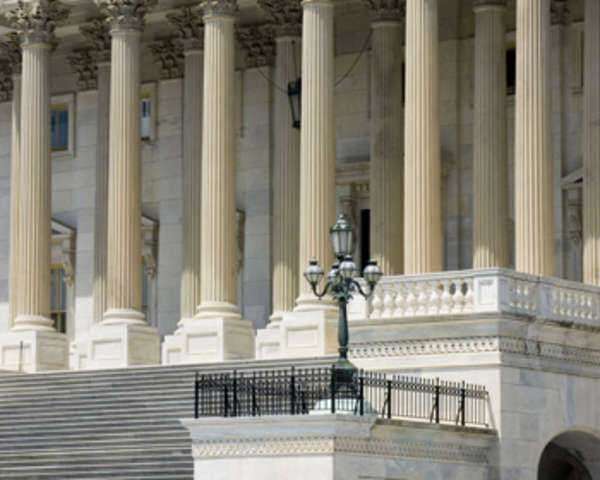
Circuit Court access has become much easier to obtain in recent years. In addition to Circuit Court access to rulings granted by West Publishing Company in the Federal Reporter and Federal Appendix, Circuit Court access can be found online. Circuit Court access involves each court's website.
Second Circuit Court of Appeals
The Second Circuit Court of Appeals represents New York, Connecticut, and Vermont. The Second Circuit Court of Appeals meets in downtown Manhattan. The Second Circuit Court of appeals is one or two Circuit Court of Appeals to have the majority of its members appointed by a single President, in this case President William Jefferson Clinton.
Third Circuit Court of Appeals
The Third Circuit Court of Appeals has appellate jurisdiction over courts in Pennsylvania, New Jersey, Delaware, and the United States Virgin Islands, making it one of the three Circuit Courts of Appeals to have appellate jurisdiction over a territory of the United States of America.
Fourth Circuit Court of Appeals
The Fourth Circuit Court of Appeals hears appeals resulting from district court cases in West Virginia, Virginia, Maryland, North Carolina, and South Carolina. The Fourth Circuit Court of Appeals is the most efficient Circuit Court of Appeals, averaging seven months per appeal.
Fifth Circuit Court of Appeals
The Fifth Circuit Court of Appeals ceded appellate jurisdiction over Alabama, Georgia, and Florida to the newly established Eleventh Circuit Court of Appeals in 1981, but retains jurisdiction over district courts in Texas, Louisiana, and Mississippi.
Sixth Circuit Court of Appeals
The Sixth Circuit Court of Appeals is the appellate court for district courts in Michigan, Ohio, Kentucky, and Tennessee. The Sixth Circuit Court seated the only man to serve as both President and Supreme Justice of the United States of America, President Howard Taft.
Seventh Circuit Court of Appeals
The Seventh Circuit Court of Appeals reviews district court decisions in Wisconsin, Illinois, and Indiana. The 7th Circuit Court of Appeals is the most technologically advanced, featuring an online presence that involves the use of a wiki site and an RSS feed which allows individuals to obtain information about arguments presented in the cases.
Eighth Circuit Court of Appeals
The 8th Circuit Court of Appeals is the appellate court for Minnesota, North Dakota, South Dakota, Iowa, Nebraska, Missouri, and Arkansas. Until 1929, the 8th Circuit Court of Appeals had appellate jurisdiction over Wyoming, Utah, Colorado, Kansas, New Mexico, and Oklahoma, until these district courts were removed to form the Tenth Circuit Court of Appeals.
Ninth Circuit Court of Appeals
The 9th Circuit Court of Appeals is the largest appellate district Court, covering Alaska, Washington, Idaho, Montana, Oregon, California, Nevada, Arizona, and Hawaii. The Ninth Circuit Court of Appeals also oversees courts in Guam and the Northern Mariana Islands.