Four Levels of the Wisconsin Court System
📅 2026 Update: Changes in the Wisconsin Court System and Fees
Since the original article was written, there have been notable updates to the Wisconsin court system, especially regarding fees and procedures. These changes are important for anyone navigating the court process, whether filing a case or seeking information about court records. The earlier article continues further down the page, providing a comprehensive overview of the court system.
💵 Federal Court Fees Have Increased
The filing fee for a new civil case in federal district courts rose to $405.00 as of December 1, 2023. This fee includes a $350.00 filing charge and a $55.00 administrative fee. Individuals should be aware of these costs when considering filing a civil complaint.
📄 Filing a Civil Complaint
Individuals representing themselves, known as pro se, must file a civil complaint with the court. The Clerk’s Office provides court-approved forms to aid in this process. It's crucial to ensure that all necessary documents are correctly filled out to avoid delays.
⏳ Processing Times for Complaints
After filing a civil complaint, the court will screen it in a timely manner. However, there is no guaranteed specific processing time. Individuals should prepare for possible wait times depending on the court's workload.
🏛️ Pro Se Representation and IFP Applications
Anyone can represent themselves in federal court. If a person cannot afford filing fees, they can submit an In Forma Pauperis (IFP) application to request a fee waiver. This can significantly ease the financial burden on those in need.
📌 Key Points to Remember
- 💵 Civil case filing fee is $405.00.
- 📄 Pro se individuals can file complaints using court-approved forms.
- ⏳ Processing times for complaints are variable.
- 🏛️ IFP applications can help waive filing fees for those in need.
💡 Tips for Navigating the Wisconsin Court System
Review your specific situation carefully with your attorney to ensure the best approach for your case.
📑 Understand Court Fees
Filing fees can vary depending on the type of case. Be sure to check the latest fees for civil cases, appeals, and other filings to budget accordingly.
📝 Use Approved Forms
When filing a civil complaint, always use the forms provided by the Clerk’s Office. Using unofficial forms could lead to delays or rejections of your filing.
⚖️ Be Prompt with Filings
While there is no specific deadline for filing complaints, it is advisable to file as soon as possible. Delaying could risk missing important deadlines related to the statute of limitations for your case.
🆓 Explore Fee Waivers
If you are unable to pay filing fees, consider applying for an In Forma Pauperis status. This application can help you get a waiver, making it easier to access the court system.
🔍 Check Public Access Options
Take advantage of public access terminals in courthouses. These allow free viewing of case information and documents, which can be very helpful for research and preparation.
🏆 Ranked by User Reviews (2026)
This section highlights services related to legal document preparation and support, relevant to individuals navigating the court system. These services are ranked according to Trustpilot data from October 2026. Ratings can change over time, and star ratings are just one measure of customer satisfaction.
🥇 1. LegalZoom
LegalZoom has been rated 4.5. It is known for offering online legal document preparation and business formation services. However, users should be aware of its subscription model, which may lead to unexpected charges.
🥈 2. Rocket Lawyer
Rocket Lawyer also holds a rating of 4.5. It specializes in online legal document preparation and legal advice services. Like other services, it has a subscription model that may result in additional costs for users.
🥉 3. LawDepot
LawDepot has received a rating of 4.1. It is recognized for providing online legal document preparation, particularly for estate planning documents. As with others, its subscription model can lead to unanticipated charges.
🆓 Free Government Help
Indigent individuals can access free resources such as fee exemptions and public access to certain court records. Up to $30 worth of court records per quarter can be accessed for free, making it easier for those in need to research their cases.
🔎 Comparing Legal Services
- ⭐ Trustpilot scores and reviews.
- 📄 Types of legal documents offered.
- 💰 Pricing and subscription models.
- 🏛️ Availability of customer support.
❓ Frequently Asked Questions
❓ What is the purpose of In Forma Pauperis status?
In Forma Pauperis status allows individuals who cannot afford court fees to file for free or reduced fees. This helps ensure access to the legal system.
📅 How long does it take to process a civil complaint?
Processing times for civil complaints can vary. The court screens complaints promptly, but no specific timeframe is guaranteed.
📝 Can I represent myself in federal court?
Yes, individuals have the right to represent themselves in federal court. However, they must follow all applicable rules and procedures.
💼 What fees are involved in filing an appeal?
The filing fee for a notice of appeal is $605.00. It's important to account for this cost when considering an appeal.
📜 How do I access court records?
Individuals can access court records for free at public access terminals in courthouses. Charges apply only after accessing more than $30 worth of records per quarter.
👥 What is jury service in federal courts?
Federal juries typically consist of 6 to 12 members. Trials are usually public, while jury deliberations are kept private.
⚖️ Recent Cases in the Wisconsin Court System
Recent court rulings reflect ongoing developments within the Wisconsin court system, relevant to the topics covered in this article.
- Court dismisses appeal over family assistance eligibilityTribunal De Apelaciones De Puerto Rico/Court of Appeals of Puerto Rico · April 16, 2026
- Puerto Rico court affirms inheritance partition rulingTribunal De Apelaciones De Puerto Rico/Court of Appeals of Puerto Rico · April 15, 2026
- Puerto Rico court modifies ruling on lease contract disputeTribunal De Apelaciones De Puerto Rico/Court of Appeals of Puerto Rico · April 15, 2026
- Puerto Rico Court Dismisses Appeal in Eviction CaseTribunal De Apelaciones De Puerto Rico/Court of Appeals of Puerto Rico · April 15, 2026
For more recent rulings, feel free to browse more rulings on the news page.
End of October 2026 Update
The Wisconsin Court system involves four levels of Wisconsin courts that are administered by the State. In addition, there are two Federally-administered Wisconsin courts. The first Federally-managed Wisconsin court is the United States District Court for the Western District of Wisconsin and the second Federal Wisconsin Court is the United States District Court for the Eastern District of Wisconsin.
On the State level, the lowest Wisconsin court is a Municipal Court. The next level of the Wisconsin court system is the Wisconsin Circuit Court System. There are ten judicial administrative districts of these Wisconsin courts. There is an intermediate appellate Wisconsin court, the Wisconsin Court of Appeals. The Appeals Court is broken into four districts.
At the top of the Wisconsin Court System is the Wisconsin Supreme Court. The Wisconsin Supreme Court has the authority to oversee the entire Wisconsin court system. The jurisdiction of the Wisconsin Supreme Court has only the slightest of limitations. The jurisdiction of the Wisconsin Supreme Court extends to original actions, appeals against the actions of a lower Wisconsin court, and the regulation and administration of the practice of Wisconsin law.
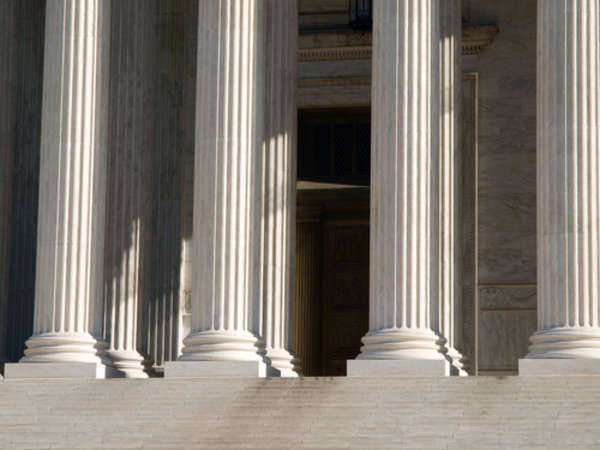
The Wisconsin Supreme Court includes seven justices who are elected in non-partisan, State-wide elections to serve ten year terms. Only one seat can be up for election at a time. In the event that a vacancy develops, the Governor of Wisconsin appoints someone to fill the seat, who must then stand for election in the next year when another seat would not otherwise expire.