Court Explained
📅 2026 Update: Recent Changes in US Court Procedures
Since the original article was published, there have been several important updates in US court procedures, especially regarding filing fees and forms. These changes impact how individuals navigate the legal system, whether they are filing a case or responding to one. The earlier article continues below, offering a broader overview of the court system.
💵 Federal Court Fee Increases
The filing fees for federal civil cases have risen since the last article. As of December 1, 2023, the new fee for filing a civil case in federal district courts is $405.00. This includes a $350.00 filing fee and a $55.00 administrative fee.
📄 New Filing Fees
In addition to the civil case filing fee, other costs have been updated. The Notice of Appeal fee is now $605.00, while a Habeas Corpus Petition costs only $5.00. For those filing under the Cuban LIBERTAD Act, the fee is $7,202.00.
📝 IFP Applications
Individuals who cannot afford filing fees have the option to submit an In Forma Pauperis (IFP) application. This application may allow them to waive the filing fees, making the legal process more accessible for low-income individuals.
⏳ Complaint Processing Times
After filing a complaint, the court screens it for validity. While there is no guaranteed processing time, courts aim to review complaints quickly. Prompt filing is still important to avoid missing deadlines related to statutes of limitations.
📌 Key Points Summary
- Filing fees for civil cases now total $405.00.
- Individuals can apply for IFP status to waive fees.
- Notice of Appeal fees are now $605.00.
- Courts aim to process complaints quickly, but no specific timeline is guaranteed.
- Prompt filing is recommended to avoid missing deadlines.
💡 Practical Tips for Navigating the Court System
Review the details of your own situation with your attorney to ensure you understand your options.
📃 Understand Your Fees
Know the current filing fees in your jurisdiction. Federal civil case fees increased to $405.00 as of December 1, 2023. Being aware of costs can help you plan better.
🖊️ Use Approved Forms
When filing a civil complaint, individuals representing themselves should use court-approved forms. These forms are available at the Clerk’s Office and help ensure compliance with court rules.
📨 Serve Defendants Properly
Each defendant must be served with a summons. Methods include certified mail, process servers, or U.S. Marshals.
Proper service is critical for moving forward with your case.
📅 Keep Track of Deadlines
While there is no specific deadline for filing complaints, it is essential to file promptly. Delays could lead to issues with statutes of limitations, impacting your case.
📚 Access Free Resources
Individuals can access public court records for free up to $30 worth per quarter. This allows for better preparation and understanding of your case without incurring extra costs.
🏆 Services Ranked by User Reviews (2026)
This section highlights services that assist individuals with legal documents and processes related to court procedures. The rankings are based on Trustpilot data from October 2026. Ratings can change over time, and while star ratings are informative, they may reflect a higher number of reviews from unhappy customers.
🥇 1. Rocket Lawyer
Rocket Lawyer has been rated 4.5. It is known for its online legal document preparation and legal advice services. Users appreciate the platform for its ease of use in creating legal documents.
However, some reviewers caution about the subscription model, which may lead to unexpected charges.
🥈 2. LegalZoom
LegalZoom also holds a 4.5 rating. This service specializes in online legal document preparation and business formation. Many users find it helpful for creating essential legal documents.
The subscription model can be a drawback, as it may result in unanticipated costs for users.
🥉 3. LawDepot
LawDepot has a 4.1 rating. It focuses on online legal document preparation, particularly for estate planning. Reviewers have noted its user-friendly interface for creating documents.
However, like the others, it operates on a subscription basis, which some users find confusing.
🆓 Free Government and Nonprofit Help
For those who need assistance, various free government and nonprofit options exist. Individuals can access public court records up to $30 worth per quarter at no charge. The Federal Judicial Center also offers free access to a database of federal court cases, which includes both civil and criminal cases.
🔎 Choosing the Right Service
- User Ratings: Check for the overall score and number of reviews.
- Document Types Offered: Ensure the service covers the documents you need.
- Cost Structure: Understand whether fees are one-time or subscription-based.
- Customer Support: Look for services with strong customer support options.
- Ease of Use: Review user feedback regarding the platform's usability.
❓ Frequently Asked Questions
❓ What is the new filing fee for civil cases?
The current filing fee for a new civil case in federal district courts is $405.00, effective as of December 1, 2023.
📋 How can I obtain a fee waiver?
Individuals unable to afford filing fees can submit an In Forma Pauperis (IFP) application to request a waiver from the court.
📅 Are there deadlines for filing complaints?
While there is no specific deadline provided, it is advisable to file complaints promptly to avoid potential issues with statutes of limitations.
📝 How can I access public court records?
Individuals can access up to $30 worth of court records free per quarter. This can be done through public access terminals in courthouses.
📄 What methods can I use to serve defendants?
Defendants can be served via certified mail, process servers, or U.S. Marshals. Proper service is crucial for the case to proceed.
🗂️ What are the different types of cases handled by federal courts?
Federal courts primarily handle cases involving federal law, while state courts deal with cases involving state law. Each system has its own rules and procedures.
⚖️ Recent Court Cases
There have been several recent rulings that affect court procedures and filing practices. These rulings illustrate how the legal landscape continues to evolve and influence the court system.
- Puerto Rico Court Denies Appeal in Divorce CaseTribunal De Apelaciones De Puerto Rico/Court of Appeals of Puerto Rico · August 18, 2026
- Puerto Rico court rules on baseball team's injunction caseTribunal De Apelaciones De Puerto Rico/Court of Appeals of Puerto Rico · August 20, 2026
- Puerto Rico Appeals Court Dismisses Expropriation Case AppealTribunal De Apelaciones De Puerto Rico/Court of Appeals of Puerto Rico · August 19, 2026
- Puerto Rico court upholds dismissal of consumer complaintTribunal De Apelaciones De Puerto Rico/Court of Appeals of Puerto Rico · August 19, 2026
For more recent rulings and updates on court cases, you can browse more rulings on the news page.
End of October 2026 Update
What is a Court?
A court is a type of tribunal that is typically instituted and
run by a governmental institution. A court, as a result of its government
ruling, has the ability and authority to deliberate and subsequently settle
legal disputes between parties who undergo civil or criminal trials.
In
addition to evaluating disputes, while ultimately providing a resolution for
the underlying problem, the court system in developed nations will carry out
the administration of justice in all civil, criminal and administrative matters
in accordance with the underlying nation’s rule of law.
In both civil and common law legal systems throughout the
developed world, it is generally understood that everyday citizens may bring
their claims or legal matters to a court for official review.
When these
matters are brought to a court, the underlying matter is thoroughly reviewed
under the rule of law to establish a settlement (typically the exchange of
monies to the damaged party in a civil claim) or a remedy in the form of a
criminal punishment.
Terminology Associated with the Court:
The court systems that interpret and apply the law are
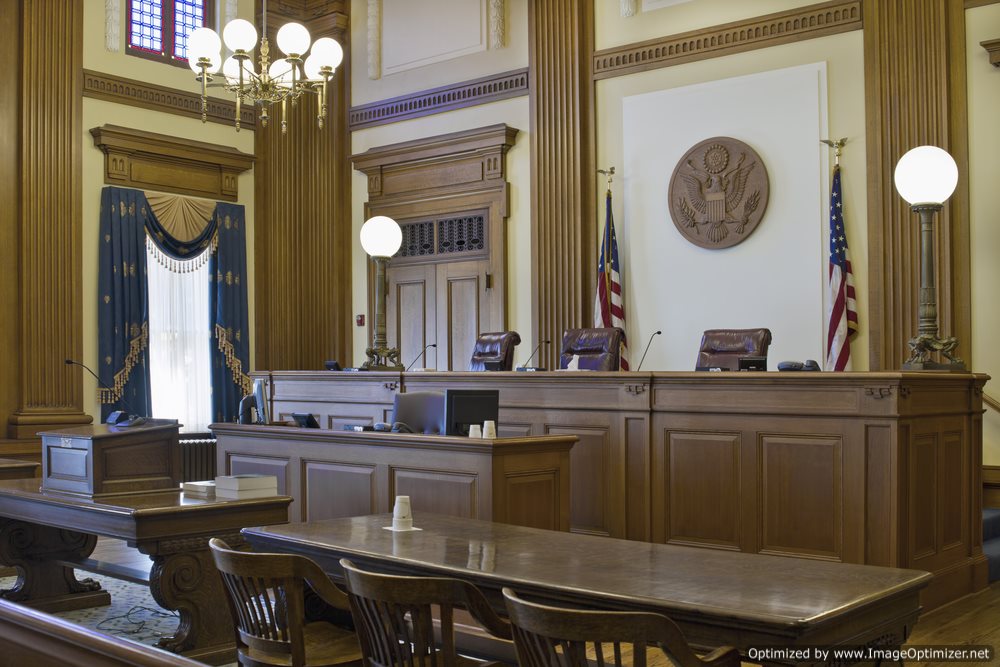
collectively known as the judiciary system. The tangible place where a court
sits, meaning the actual venue that overhears a legal matter, is known as the
venue.
The tangible room where the court proceedings occurs is called the
courtroom and the building where the tangible courtroom is located is called
the courthouse. All court facilities will range from a simple facility in rural
communities to awe-encompassing structures in urban areas.
The term “jurisdiction” means to “speak the law”. The
jurisdictional powers refer to the court’s ability to preside and deliberate
over a person or a legal claim. In the United States of America, a court must
possess both personal jurisdiction and subject matter jurisdiction.
Each State in America’s jurisdictional system establishes a
court system for the territory under its particular control. This system, thus,
allocates work to courts or authorized personnel through the ability to grant
both civil and criminal jurisdiction. The grant of power to each category of
specific court or individual may stem from a provision latent in a particular Constitutional
Amendment or provision, or through the presence of a statute.
The trial court system is the court that holds trials. Trial
courts, in most instances, possess original jurisdiction over the majority of
cases. Trial courts, in developed nations of law which possess juries to
institute a judgment on the particular matter, are referred to as the finders
of fact. Trials that harbor judges will act as both finders of fact and finders
of law. These court systems are known as bench trials.
Major Forms of Courts:
The two primary models for courts are the common law courts and
the civil law courts. Civil courts are primarily based upon the judicial system
present in France, whereas the common law courts are based on the judicial system
in England. In the majority of civil law jurisdictions, courts will function
under an inquisitorial system. In a common law system, the courts follow the
adversarial system.
Procedural law governs the rules by which a court operates:
civil procedure for the majority of disputes and criminal procedure for any
violation of criminal law.