Understanding A Court Reporter
📅 2026 Update: Changes in Court Reporting and Legal Services
Since the original article on understanding court reporters was published, there have been no major changes in laws affecting legal representatives in U.S. courts. However, various aspects of court procedures and the roles of different legal professionals remain important for anyone navigating the court system. This update includes recent information relevant to court reporters and other legal services, which you can find in detail further down this page.
📝 Role of Court Reporters
Court reporters continue to play a vital role in legal proceedings. They are responsible for transcribing spoken words during trials, hearings, and depositions. This ensures that accurate records are maintained for future reference.
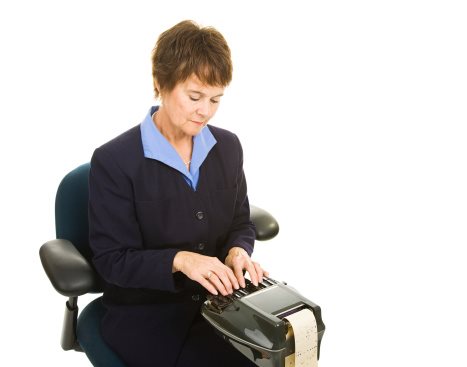
Court reporters use specialized equipment to capture every detail of the proceedings.
- 📜 Transcription Accuracy: The quality of the transcripts produced can significantly affect legal outcomes. Accurate records are essential for appeals and other legal processes.
💵 Current Fees and Costs
Legal fees, including those for court reporters, vary widely across different jurisdictions. This means that individuals may encounter different costs depending on where they are located. Understanding the local fee structure is crucial for planning legal expenses.
- 💰 Jurisdiction Matters: What you pay for legal services may depend on your location. Be sure to check local rates for court reporters and other legal professionals.
⏳ Processing Times
Processing times for legal documents and court cases can differ greatly. Factors such as case complexity and jurisdiction can affect how long it takes for a case to move through the system.
- ⏲️ Be Prepared: Knowing that processing times vary can help you manage expectations when dealing with court matters.
📅 Filing Procedures
To file a case, individuals must complete the correct forms available through their local Clerk of Court. This applies to all jurisdictions, including Clay County and Orange County.
- 🗂️ Forms Availability: Always check with your local Clerk's office or website for the most recent forms needed to file your case.
📌 Key Points to Remember
- 📑 Court reporters transcribe spoken words in court.
- 💵 Fees for legal services vary by jurisdiction.
- ⏳ Processing times can differ based on case complexity.
- 📅 Correct filing procedures are essential in any court case.
- 🏛️ Understanding local court systems is crucial for success.
💡 Tips for Navigating Court Procedures
It is important to review your specific situation with your attorney. They can provide guidance tailored to your circumstances.
📋 Understand Your Rights
Know your rights regarding court proceedings. This includes your right to a fair trial and access to court records.
📄 Keep Records
Maintain your own records of all documents submitted to the court. This can help you track your case and ensure that everything is in order.
⏲️ Monitor Deadlines
Be aware of deadlines for filing legal documents. These can vary based on the type of case and jurisdiction, so staying organized is key.
🏛️ Familiarize Yourself with Court Procedures
Understand how your local court operates. This includes knowing whom to contact for questions and what to expect during hearings.
🆓 Explore Free Resources
Look into legal aid and public defender services if you need assistance but cannot afford an attorney. These resources can provide valuable support during your case.
🏆 Ranked by User Reviews (2026)
The following services are listed based on their user reviews and ratings from Trustpilot as of October 2026. These services are relevant for individuals seeking legal document preparation, business formation, or other legal assistance. Note that scores can change over time, and reviews can reflect a variety of experiences.
🥇 1. TotalLegal
TotalLegal has been rated 4.6 on Trustpilot. It is known for affordable legal document preparation and a user-friendly platform. Reviewers appreciate the transparent pricing.
However, some users report occasional delays in document delivery and minor formatting issues.
🥈 2. LegalZoom
LegalZoom holds a Trustpilot score of 4.6. This service is recognized for its legal document preparation and business formation services. Customers also use it for estate planning.
Some reviewers mention delays in processing times and occasional customer support responsiveness issues.
🥉 3. Rocket Lawyer
Rocket Lawyer averages a 4.5 score on Trustpilot. It is known for online legal document creation and business incorporation services. While many users find it helpful, some mention that the subscription model may not suit everyone and that the platform can be complex to navigate.
4️⃣ LegalShield
LegalShield has a Trustpilot rating of 4.4. It is known for providing legal subscription services that grant access to a network of attorneys. Users often appreciate the affordability of legal assistance, but some report difficulties reaching their assigned attorneys and occasional slow response times.
🆓 Free Legal Help Options
For those unable to afford legal representation, nonprofit organizations provide free or low-cost legal assistance. Additionally, public defenders are available for individuals who are involved in criminal cases and cannot afford an attorney.
🔎 Choosing Legal Services
- 📄 Compare fees and costs across different jurisdictions.
- 🏛️ Research the reputation of services based on user reviews.
- ⏳ Check processing times for document preparation.
- 📋 Ensure the service meets your specific needs.
- 💬 Look for customer support availability and responsiveness.
❓ Frequently Asked Questions
🤔 What is the role of a court reporter?
A court reporter transcribes spoken words during court proceedings, ensuring accurate records of trials and hearings.
🏛️ How do I file a case in court?
To file a case, individuals must complete the appropriate forms available through their local Clerk of Court's office.
📋 What is a gag order?
A gag order is a formal directive that prevents individuals from discussing a case publicly, often to protect the integrity of the legal process.
⏳ How long does it take to process legal documents?
Processing times for legal documents can vary widely based on jurisdiction and the complexity of the case.
💵 Are there affordable legal options available?
Yes, nonprofit organizations and public defenders offer free or low-cost legal assistance to those who qualify.
🗂️ What is an arbitrary judgment?
An arbitrary judgment is a decision made at the discretion of a judge, not fixed by law, which can impact the outcomes of legal cases.
⚖️ Recent Court Cases
Recent court rulings can provide insight into current trends and legal interpretations related to court reporting and procedures. Understanding these cases can help you navigate the court system more effectively.
- California court affirms termination of mother's parental rightsCalifornia Court of Appeal · October 20, 2026
- California court affirms termination of guardianship over A.M.California Court of Appeal · October 20, 2026
- California Court of Appeal upholds termination of servicesCalifornia Court of Appeal · October 20, 2026
- California Court dismisses appeal in insurance dispute caseCalifornia Court of Appeal · October 20, 2026
For more information, you can browse more rulings on the news page.
End of October 2026 Update
What is a
Court Reporter?
A Court
Reporter is a licensed and certified professional responsible for the
transcription of speech into text taking place within a court hearing or trial.
Court Reporter Certifications
In order to
be certified as a Court Reporter, the following may be investigated by
individuals interested in gaining employment through Stenography:
Registered Professional Reporter (RPR)
A Registered
Professional Reporter is considered to be a certification granted to
individuals interested in becoming Court Reporters. In order to advance through
the field of Court Reporting, this Court Reporter certification must be
attained. In order to receive this certification, an applicant must:
Receive a passing grade on the Written Knowledge Test, which gauges the skill
of an individual applicant with regard to the expectations of a Court Reporter.
The test includes a section that focuses on reporting, the ability to produce
transcription of events, the understanding and proficiency with regard to a
stenograph machine, and a review of background knowledge and professional
acumen;
Produce literary transcription at a rate of 180 words per minute;
Produce Jury Charge transcription at a rate of 200 words per minute;
Produce testimony in a ‘question and answer’ setting at a rate of 225 words per
minute.
National Court Reporters Association (NCRA)
This
Association oversees and regulates the certifications that are granted to
individuals who desire to gain employment through a Court Reporter position.
The NCRA began as an institution specializing in shorthand with regard to the
provision of expedited and accurate transcription of events. The NCRA teaches
the methodology expressed in The Phrase Book of Pitmanic Shorthand with regard
to the authorized transcription of legal and medical proceedings.
Stenograph
A Stenograph
machine, also called a Stenotype machine, is a machine resembling a typewriter
that is used by a Court Reporter for the purpose of transcription. Unlike a
traditional typewriter, a stenograph machine contains only 25 keys and does not
operate on a traditional keyboard format such as ‘QWERTY’. In lieu of a
traditional keyboard, stenotypes allow a court reporter to transcribe common
phrases and articles rather than individual letters and characters.
Due to the
fact that typical transcription can involve events that range from 100 to 300
words recited per minute, a Court Reporter must maintain the ability to
accurately transcribe the speech of an event in real time. The stenograph
machine was patented in 1879 and currently varies in sale price. These prices
range from $500 to $7,000 USD.
Chording
Chording is
a typing method utilized by a Court Reporter allowing them to adequately and
accurately press multiple keys in a single stroke. This allows them to
transcribe whole words in lieu of typing the word in a ‘letter-by-letter’
fashion. Chording also allows a Court Reporter to maintain accurate
transcription in the means of ‘real time’ transcription.
Additional Court Reporter Certifications
The
following are additional certifications that can be earned in the profession of
Court Reporting. These certifications vary upon location and requirements with
regard to their respective attainment:
Certified CART Provider (CCP)
Certified Broadcast Captioner
(CBC)
Certified Realtime Reporter
(CRR)
Registered Merit Reporter
(RMR)
Federal Certified Realtime
Reporter (FCRR)
Registered Diplomate Reporter
(RDR).